Word mark vs logo mark: what's the difference?
Ready to protect your brand?
Fixed fees · expert support
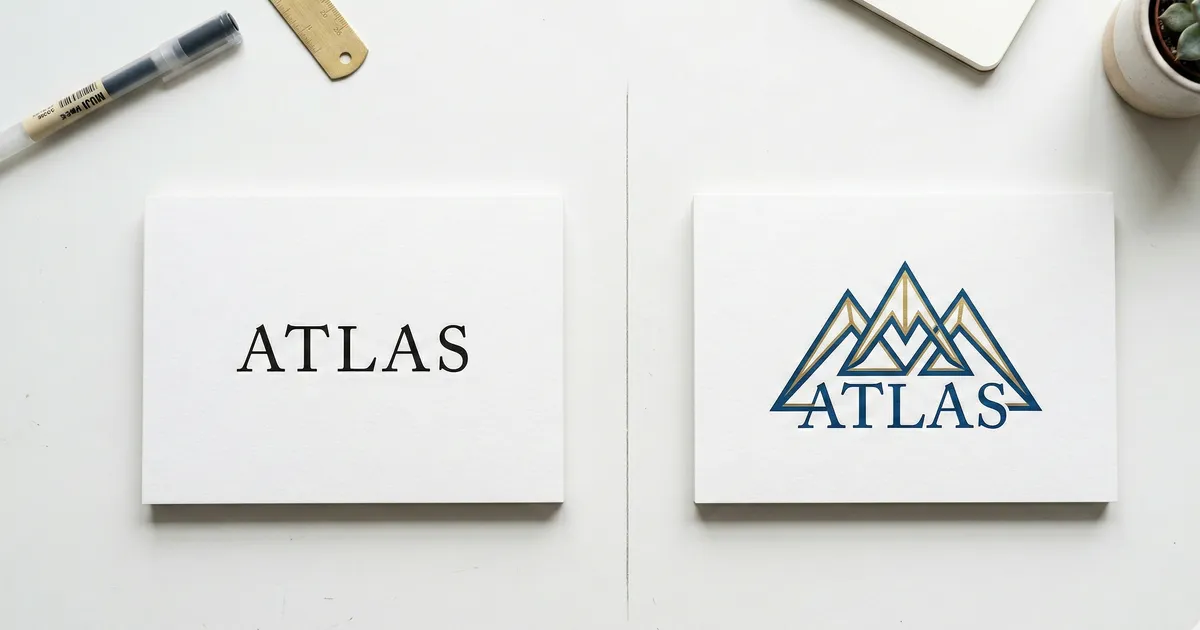
A word mark protects the words themselves. A logo mark protects a specific visual design. They cover different things, and the scope of protection you get from each is meaningfully different.
Understanding the distinction matters because the type of mark you register determines exactly what you can (and can't) enforce against competitors.
What does a word mark protect?
A word mark protects the name itself — the actual text — regardless of how it's presented visually. Font, colour, style, and layout are all irrelevant. The registration covers the words in any visual form.
For example, if you register a word mark for BRIGHT SPARK, that registration protects the name whether it appears in bold sans-serif on your website, in handwritten script on packaging, or in plain text in a Google ad. If a competitor uses "Bright Spark" or "BRIGHTSPARK" for similar goods or services, your word mark gives you a basis to take action — no matter what their branding looks like.
This makes word marks the broadest form of trade mark protection. You're not tied to any particular presentation, and enforcement doesn't depend on visual similarity.
What does a logo mark protect?
A logo mark protects the visual design of your brand. There are two main types:
- Composite marks combine words and design elements — for example, a stylised business name with a graphic icon. The registration protects that specific visual combination: the words, the font, the layout, and any graphic elements, taken together.
- Device marks are purely visual — a symbol, icon, or graphic with no words at all. The Nike swoosh and the Apple logo are device marks. They protect the design on its own, independent of any name.
Most businesses that file a logo mark are filing a composite mark, because their logo typically includes their brand name. But if your brand has a distinctive standalone symbol, a device mark may also be worth considering.
Scope of protection: where the difference matters
The practical difference between the two types shows up when you try to enforce your registration.
Word mark enforcement
A word mark catches a wide range of potential infringements because it covers the name in any visual form. If someone uses your name — or a deceptively similar name — for similar goods or services, the visual presentation is largely irrelevant.
Example: You register the word mark COASTAL CANDLE CO. A competitor launches a candle business called "Coastal Candle Company" with completely different branding, colours, and fonts. Your word mark registration still gives you a strong basis to act, because the name is substantially identical.
Logo mark enforcement
A logo mark has a narrower scope. It protects the specific visual combination that was registered. Change one element significantly, and you may fall outside the registration's coverage.
Example: You register a composite mark that includes the words "Coastal Candle Co" in a particular font, arranged around a wave illustration. A competitor uses the name "Coastal Candle Co" but in a completely different visual style with no wave graphic. Your logo mark registration may not be enough to stop them, because the visual impression is different — even though the words are the same.
Conversely, if a competitor copies your wave illustration but uses a completely different business name, your logo mark may not cover that either, depending on how central the design element was to the registered mark.
This is why, for many businesses, a word mark alone offers stronger enforcement potential than a logo mark alone.
When a logo mark adds real value
Logo marks are not simply a weaker alternative. There are situations where they offer protection that a word mark cannot.
Visual copycats
In digital and online spaces, copycats tend to mimic the look and feel of a brand rather than the exact name. They use similar colours, layouts, and design cues to create confusion — without necessarily copying your name word for word.
A logo mark protects the visual identity that customers recognise on screen. For e-commerce brands, apps, and businesses that primarily operate online, this can be just as important as name protection.
Easier registration for descriptive names
Composite marks are often easier to register than word marks, particularly when the words on their own are descriptive or common. The design element adds distinctiveness, which can help an application succeed where a standalone word mark might face objections.
If your name sits on the borderline of distinctiveness, a logo mark may be the more realistic path to registration — though its protection will be narrower than a word mark would have been.
The "substantially identical" test
Australian trade mark law uses a "substantially identical" test when comparing marks. A trade mark registration protects against the use of marks that are substantially identical or deceptively similar to the registered mark.
For word marks, this test focuses on the words: their look, sound, and meaning.
For logo marks, the test considers the overall visual impression of the design. Minor differences in colour or proportion may not matter, but changes to key design elements can take a mark outside the scope of protection.
This is why logo rebrands can create gaps in your trade mark coverage. If you've recently updated your logo, it's worth checking whether your existing registration still covers the new version. See our guide on what happens when you change your logo for more.
Frequently asked questions
If I register a logo mark, am I also protecting the words in the logo?
Only as part of that specific visual combination. If someone uses the same words in a completely different style, your logo mark may not be enough to stop them. That's why a separate word mark is valuable — it protects the name regardless of how it's presented.
Does a trade mark registration protect my brand in any colour?
A word mark is not limited to any colour, font, or style. It protects the words themselves.
A logo mark is not limited to a particular colour unless a colour limitation is recorded on the application. Without a limitation, your logo mark covers the design in any colour combination.
Can I register both a word mark and a logo mark?
Yes. Many businesses register both to get comprehensive coverage. Each is a separate trade mark application with its own fees. For a breakdown of the costs, see our guide on how much it costs to register a trade mark.
How do I decide which one to file?
That depends on your budget, your name's distinctiveness, and your enforcement priorities. We cover the decision framework in detail in our guide on whether to register your logo, your name, or both.
Need help?
If you're not sure which type of trade mark is right for your brand, start your application with Markster or contact us for advice on your trade mark registration strategy. For a full overview of the registration process, see our trade mark applications page.
Please note, the information in this article is general in nature and is not legal advice. You should seek independent legal advice tailored to you and your circumstances.
Should you file a trade mark now?
Answer 10 quick questions and get a personalised recommendation on whether to file, self-file, or get expert help first.
Takes under 3 minutes
Ready to protect your brand?
Business owners who need an Australian trade mark
Fixed fees · expert support

Kate McAlister
Director & Co-Founder
Kate is an intellectual property and technology lawyer with a decade of experience in trade mark strategy, portfolio management and commercialisation for clients ranging from startups to ASX-listed companies.
View full profileRelated articles

How to register a trade mark in Australia
Everything you need to know about registering a trade mark in Australia — the process, costs, key decisions, and when to get help.

The trade mark registration process in Australia: steps and timeline
A clear breakdown of each stage of the Australian trade mark registration process, from filing to registration, including timelines and what to expect.

How to choose a strong trade mark
A practical guide to choosing a trade mark that is distinctive, registrable, and enforceable — covering the spectrum of distinctiveness, clearance searches, and common mistakes to avoid.