How to overcome a trade mark examination report
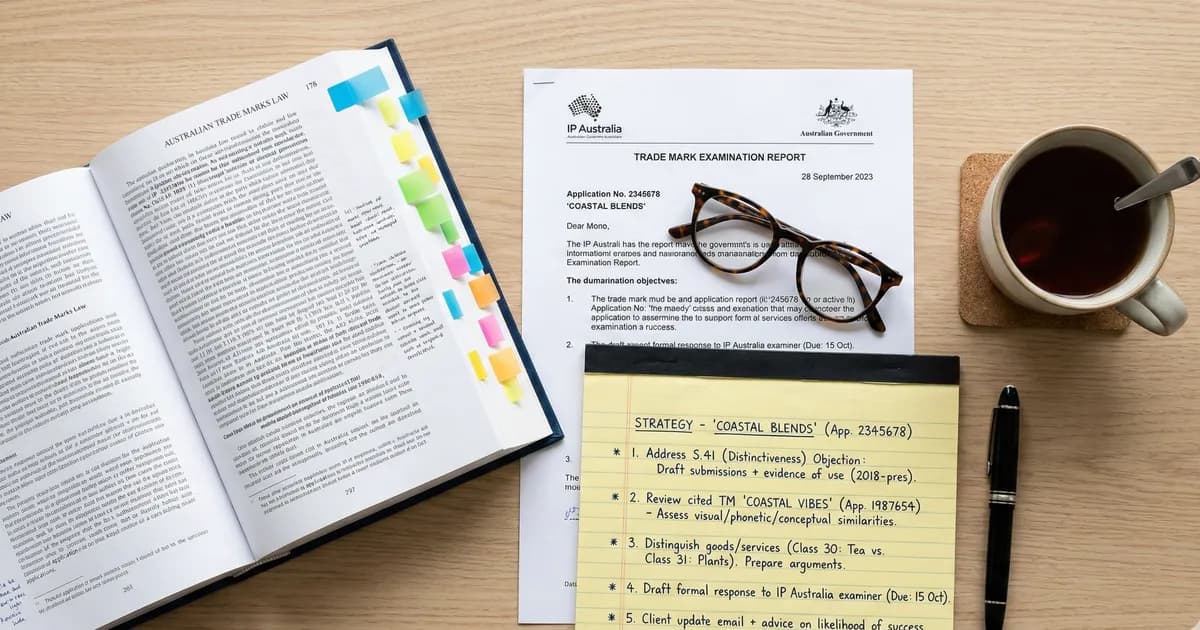
Received an examination report?
Response within 1 business day
Most examination reports from IP Australia can be overcome with the right response. The key is choosing the right strategy — or combination of strategies — for the specific objections raised against your application.
If you have not already, start with our guide on what a trade mark examination report is to understand the process and deadlines. This article focuses on the practical strategies you can use to respond.
Need help with your response? Upload your examination report for a free review and our trade mark lawyers will recommend the best path forward.
Legal submissions
A common way to respond to an examination report is by making legal submissions. This means presenting written arguments to the examiner explaining why their objection should be withdrawn.
For section 41 objections (distinctiveness)
If the examiner has raised an objection on the basis that your mark is not distinctive enough, you might argue that the mark does in fact possess the requisite level of distinctiveness when considered as a whole and in the context of the goods or services you have applied for.
For example, if the examiner considers "GOLDEN HARVEST" descriptive for a food brand, you might argue that the mark is suggestive rather than descriptive — it hints at quality without directly describing the goods. The distinction between suggestive and descriptive can be nuanced, and a well-crafted submission can shift the examiner's view.
If your mark has been rejected as descriptive, our dedicated guide covers the specific arguments and options available for section 41 objections.
For section 44 objections (conflicting marks)
If the objection relates to a conflicting mark under section 44 of the Trade Marks Act (a citation), you might argue that the marks are not deceptively similar. This could involve comparing the visual, aural, and conceptual aspects of the marks, and explaining why consumers are unlikely to be confused.
For example, if your mark "APEX FITNESS" has been cited against "APEX SOLUTIONS" (registered for business consulting), you could argue that the different second words, combined with the completely unrelated fields of use, mean consumers would not confuse the two.
Legal submissions require a solid understanding of trade mark law and how examiners apply the relevant tests. A well-crafted submission can make the difference between acceptance and refusal.
For a full breakdown of the different types of objections, see our guide on what types of objections IP Australia can raise.
Evidence of use
If your trade mark has been in use in Australia before the filing date, you may be able to overcome certain objections by filing evidence of use.
This is most commonly used to overcome section 41 objections, where the evidence needs to demonstrate that the mark has become distinctive through use — meaning that consumers have come to associate it with your goods or services. However, evidence of use can also be relevant to section 44 objections, for example by showing use of your mark prior to the priority date of a cited mark, or by establishing honest concurrent use.
What evidence is needed?
Filing evidence of use typically involves preparing a statutory declaration (a sworn statement) supported by documents showing genuine and continuous use of the mark in the course of trade.
The kind of evidence that can support this includes:
- Sales figures — revenue data showing the volume of trade conducted under the mark.
- Advertising spend — how much you have invested in promoting the mark.
- Marketing materials — brochures, social media posts, online advertisements, and other materials showing the mark in use.
- Invoices and receipts — transactional records demonstrating trade under the mark.
- Website traffic data — analytics showing consumer engagement with the mark online.
- Customer testimonials — statements from customers or industry contacts who recognise the mark as identifying your business.
Preparing evidence of use can be a detailed process, and the evidence needs to meet certain requirements. We have covered this in more detail in our guide on what evidence of use involves for a trade mark.
Letters of consent
If your application has been blocked because of a similar mark owned by someone else (a section 44 citation), one option is to approach the owner of the blocking mark and ask them for a letter of consent.
A letter of consent is a written statement from the owner of the cited mark confirming that they have no objection to your mark being registered.
In practice, IP Australia will generally accept a letter of consent and withdraw the citation. The owner of the cited mark may not even be aware of your application, and many owners are willing to provide consent if your goods and services do not directly compete with theirs.
For example, if a small local business owns the cited mark and operates in a different geographic market or industry segment, they may have no commercial concern about your registration. A polite, well-explained request can go a long way.
Amending the application
Sometimes the simplest way to overcome an objection is to amend your application. This might involve:
Narrowing the goods and services specification. If the objection is based on a conflict with another mark, limiting your specification to exclude overlapping goods or services can sometimes resolve the issue. For example, if you have applied broadly for "clothing" but the conflict only arises in relation to footwear, removing footwear from your specification may be enough.
Disclaiming part of the mark. If the objection relates to a descriptive or non-distinctive element within your mark, you may be able to disclaim that element. A disclaimer means you acknowledge that you do not have exclusive rights over that particular element on its own, but the mark as a whole is still protectable. For example, if your mark is "SMITH'S ORGANIC PRODUCE" and the objection is to the word "ORGANIC", disclaiming "ORGANIC" may address the concern.
Making other amendments. Depending on the nature of the objection, other amendments to the application may be possible, such as correcting owner details or clarifying the representation of the mark.
The key is to make sure any amendment resolves the objection without significantly weakening the protection your registration will provide. Getting the goods and services right from the outset can help avoid this situation, so if you are still in the planning stages, check out our guide on how to choose the right goods and services for your trademark application.
Combining approaches
In practice, the strongest response to an examination report often combines multiple strategies.
For example, you might file legal submissions arguing that the marks are not deceptively similar, while also narrowing your goods and services specification to reduce the overlap with the cited mark. Or you might combine legal submissions on distinctiveness with evidence of use to build the strongest possible case.
A combined approach is particularly effective when no single strategy is decisive on its own. For instance, where a mark is borderline descriptive, pairing submissions on inherent distinctiveness with modest evidence of use can tip the balance.
The right combination depends on the specific objections raised, the strength of your arguments, and the evidence available to you. Taking the time to consider all of your options before responding will put you in the best position.
Deadlines and timing
IP Australia sets a deadline for responding to an examination report, and it is important not to leave your response to the last minute.
You will typically have 15 months from the date of the first examination report to get your application accepted. However, there are a couple of things to keep in mind:
- IP Australia requires at least 4 weeks to review a response. If you file your response right before the deadline, the examiner may not have time to review it before the deadline expires.
- You may need more than one round of correspondence. The examiner might not accept your first response, and you may need to file additional submissions or evidence. Each round takes time, so the earlier you start, the more room you have to work with.
- Extensions are possible, but not guaranteed. In some circumstances, you can request an extension of time, but this involves additional fees and is not always granted.
The best approach is to respond as early as possible. This gives you the flexibility to adjust your strategy if your initial response does not fully resolve the objection.
When to get professional help
You can respond to an examination report yourself, and many applicants do. However, some objections are more complex than others, and a response that misses the mark can make it harder to get your application accepted down the track.
Consider getting professional advice if you are dealing with:
- a section 44 citation against a well-known mark;
- a distinctiveness objection for a mark you have been using for years;
- multiple objections in the same report; or
- an objection you are not sure how to interpret.
What might seem like a fatal objection often has a viable path forward with the right analysis and strategy. A trade mark lawyer can assess the objections, identify the strongest arguments available, and prepare a response that gives your application the best chance of success.
Frequently asked questions
Can I respond to an examination report myself?
Yes, you can respond to an examination report yourself. IP Australia's online portal allows you to file a response directly. However, if the objections are complex or you are unsure about the best approach, getting professional help can improve your chances of success.
What happens if my response to the examination report is rejected?
If the examiner does not accept your response, they will issue a further report explaining why. You can then file additional submissions, evidence, or amendments to try to overcome the remaining objections, provided you are still within the deadline. If all options are exhausted and the examiner maintains the objection, your application may be refused, at which point you can request a hearing or appeal the decision.
How long does it take for IP Australia to review a response?
IP Australia generally requires at least 4 weeks to review a response to an examination report. During busy periods, it can take longer. This is one of the reasons it is important to respond early rather than waiting until the deadline.
What is the most effective strategy for overcoming an examination report?
There is no one-size-fits-all answer. The best strategy depends on the type of objection (section 41, section 44, or another ground), the strength of your mark, how long you have been using it, and your commercial goals. In many cases, combining multiple strategies — such as legal submissions and evidence of use — produces the strongest result. A free review of your examination report is the best way to get tailored advice.
Where can I learn more about the examination process?
Start with our guide on what a trade mark examination report is, which covers the process, deadlines, and your options. For the different grounds for objection, see what types of objections IP Australia can raise. For a broader overview of trade mark registration in Australia, see our trade mark applications page.
If you need help responding to an examination report, upload your report for a free review or contact us today.
The information in this article is general in nature and is not legal advice. You should seek independent legal advice tailored to you and your circumstances.
Received an examination report?
Applicants who've received an objection from IP Australia
Response within 1 business day

Chris Maher
Director & Co-Founder
Chris is a senior trade mark practitioner with over a decade of experience managing large, complex global portfolios for major Australian and international brands.
View full profileRelated articles
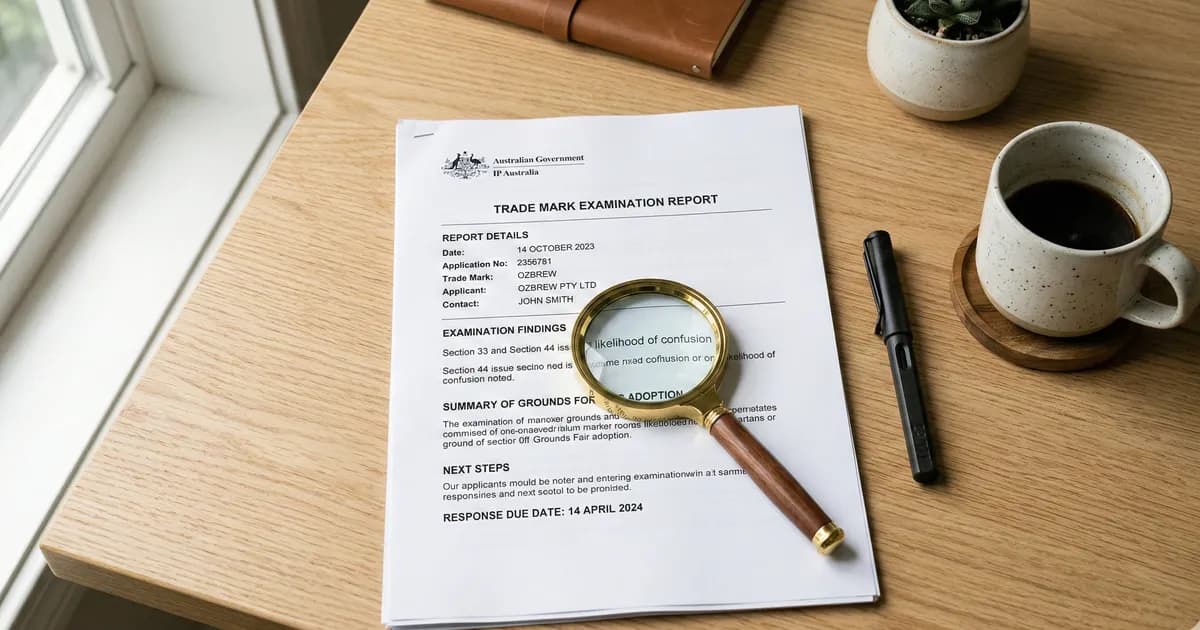
What is a trade mark examination report?
An examination report from IP Australia means the examiner has raised objections to your trade mark — but most can be overcome. Here's what to expect and how to respond.
What types of objections can IP Australia raise?
IP Australia can raise objections on several grounds, from descriptiveness to conflicting marks. Here's what each type means and how it affects your application.
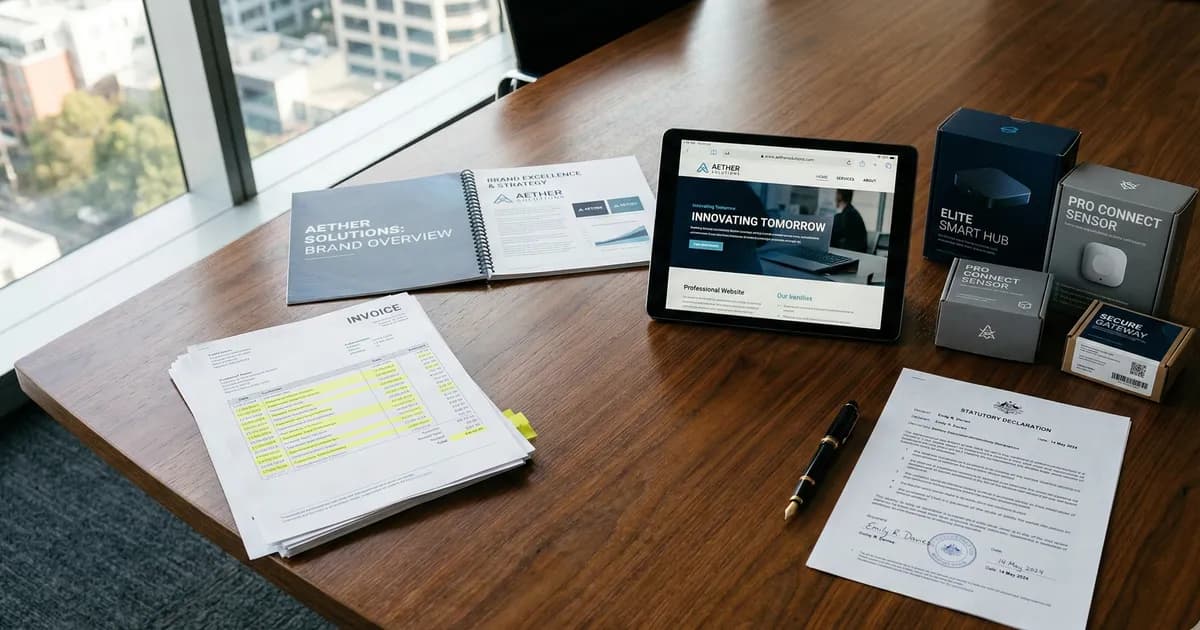
What does evidence of use involve for a trade mark?
If IP Australia raises a distinctiveness or conflicting mark objection, evidence of use can help you overcome it. Learn what to include in your statutory declaration and how to get it right.