What does evidence of use involve for a trade mark?
Received an examination report?
Response within 1 business day
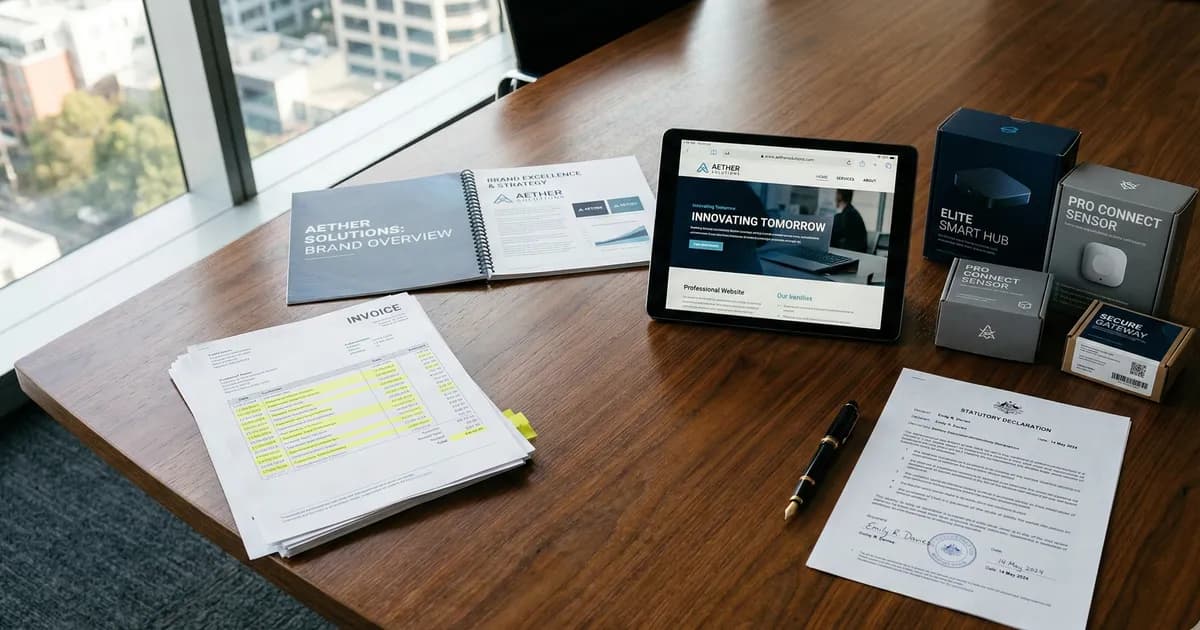
Evidence of use is one of the most effective tools for overcoming an examination report from IP Australia. It involves filing a statutory declaration supported by evidence that shows how you've used your trade mark in the course of trade.
Evidence of use is relevant to both section 41 objections (distinctiveness) and section 44 objections (conflicting marks). For section 41 objections, the evidence needs to demonstrate that your mark has acquired distinctiveness through use, meaning consumers have come to associate it with your goods or services. For section 44 objections, evidence of use can establish prior use of your mark before the priority date of a cited mark, or honest concurrent use. In practice, evidence of use is often easier to deploy for section 44 objections, as prior use is straightforward to demonstrate and honest concurrent use is generally easier to establish than acquired distinctiveness.
In this guide, we'll walk through what evidence of use involves, what you need to include, and how to avoid common mistakes.
If you're looking for a broader overview of trade mark examination, read our guide on what is a trade mark examination report.
What is a statutory declaration?
A statutory declaration is a formal legal document where you declare certain facts to be true. It is the vehicle through which you present your evidence of use to IP Australia.
The declaration must be witnessed by an authorised person, such as a justice of the peace, a lawyer, or another person authorised to witness statutory declarations in Australia.
In the declaration, you'll typically set out:
- who you are and your role in the business
- how long you've been using the trade mark
- the goods and/or services you've used it in connection with
- a summary of the evidence you're attaching
The supporting evidence is then attached to the statutory declaration as annexures.
How much use do you need?
There is no strict rule. The amount of use required will depend on the nature of the objection, the type of mark, and the goods or services involved.
The use needs to be in Australia, and it should be in the ordinary course of trade -- not token or minimal use created solely for the purpose of supporting the application.
What evidence to include
The evidence you provide needs to paint a clear picture of how your mark has been used in trade. The types of evidence that may be relevant include:
- invoices and sales records
- marketing materials and advertisements
- website screenshots
- product photos and packaging
- signage and trade show displays
- media coverage and press mentions
- revenue figures and sales data
- advertising spend
- market share data or industry reports
The specific evidence you need, and how much of it, will depend on the nature of the objection and the circumstances of your case. Getting the right mix of evidence is important, and a trade mark professional can help you identify what will be most persuasive.
Confidentiality
One concern many applicants have is that sensitive commercial information (such as revenue figures, advertising spend, or pricing) will become publicly available if they submit it to IP Australia.
The good news is that evidence can be marked as confidential when it is submitted. This means that the information won't be publicly available on the trade mark file, so you don't need to worry about competitors or other third parties accessing it.
Common pitfalls
When preparing evidence of use, there are some common mistakes that can weaken your case or result in IP Australia not accepting the evidence. These include providing evidence that doesn't match the mark as filed, submitting undated evidence, providing evidence that relates to different goods or services than those claimed in the application, or simply not providing enough evidence to support your case.
A trade mark professional can help you avoid these issues and ensure your evidence is presented in the most effective way.
For more tips on responding to examination issues, read our guide on how to overcome a trade mark examination report.
When evidence of use isn't enough
Sometimes evidence of use won't be sufficient to overcome a distinctiveness objection. This might happen if:
- you haven't been using the mark long enough
- the evidence you have is limited
- the mark is highly descriptive of the goods or services claimed
If evidence of use isn't a viable option, there are alternatives you can consider:
- Filing a composite or logo mark -- if the word mark on its own lacks distinctiveness, filing it as part of a logo or composite mark (which includes distinctive design elements) may be a way to secure registration.
- Amending the application -- in some cases, it may be possible to amend the goods and services in the application to narrow the scope and address the objection.
- Making submissions -- depending on the nature of the objection, it may be possible to argue that the mark is inherently distinctive without relying on evidence of use.
If your trade mark was rejected as descriptive, read our guide on what to do if your trade mark was rejected as descriptive.
Frequently asked questions
How long does it take to prepare evidence of use?
It depends on how organised your records are. If you have good records of your sales, marketing, and use of the mark, it can take a few weeks to compile the evidence and prepare the statutory declaration. If your records are less organised, it may take longer to track down the materials you need.
Can I file evidence of use if I've only been trading for a short time?
You can, but it will be harder to demonstrate acquired distinctiveness with a short trading history. Generally, IP Australia expects around three or more years of use. If you've been trading for less time, you may need to rely on other strategies to overcome the objection, or wait until you have a longer track record before filing a fresh application.
Do I need a lawyer to prepare a statutory declaration?
You don't need a lawyer to prepare the statutory declaration, but it can be helpful to have one assist you. A trade mark attorney can advise on what evidence to include, how to structure the declaration, and how to present the evidence in the most persuasive way.
Need help?
For a broader overview of the trade mark process, read our guide on understanding the Australian trade mark registration process.
If you need help preparing evidence of use or responding to an examination report, upload your report for a free review or contact us today.
Please note, the information in this article is general in nature and is not legal advice. You should seek independent legal advice tailored to you and your circumstances.
Received an examination report?
Applicants who've received an objection from IP Australia
Response within 1 business day

Kate McAlister
Director & Co-Founder
Kate is an intellectual property and technology lawyer with a decade of experience in trade mark strategy, portfolio management and commercialisation for clients ranging from startups to ASX-listed companies.
View full profileRelated articles
What is a trade mark examination report?
An examination report from IP Australia means the examiner has raised objections to your trade mark — but most can be overcome. Here's what to expect and how to respond.
What types of objections can IP Australia raise?
IP Australia can raise objections on several grounds, from descriptiveness to conflicting marks. Here's what each type means and how it affects your application.
How to overcome a trade mark examination report
Received an examination report from IP Australia? Here are the proven strategies for overcoming objections and getting your trade mark accepted.