What is a trade mark examination report?
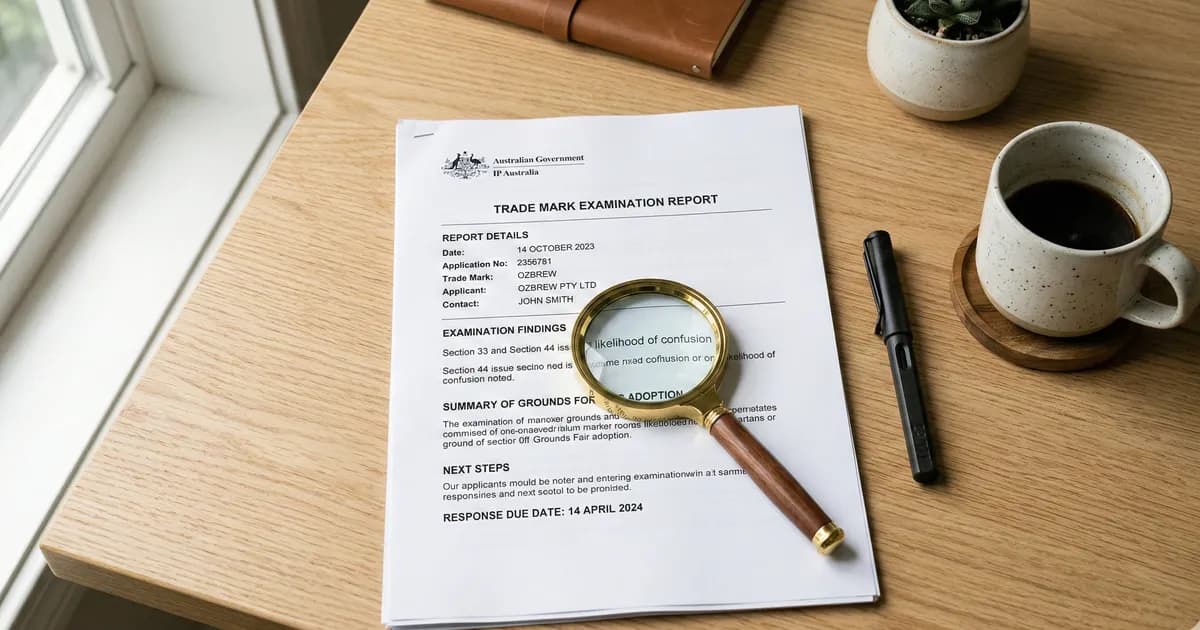
Received an examination report?
Response within 1 business day
An examination report from IP Australia is a formal notice that the examiner has identified one or more issues with your trade mark application. It is not a rejection — it is an opportunity to respond, and in most cases, the objections can be overcome with the right strategy.
This guide is the starting point for understanding examination reports. It covers what the report contains, when you will receive one, the types of objections that can be raised, your deadlines, and what you can do about it. If you have already received a report, use the links below to jump to the topic most relevant to you.
Already received your report? Upload it here for a free review by one of our trade mark lawyers.
Related guides
This article is part of a series on trade mark examination reports in Australia. Once you understand the basics, these guides go deeper on specific topics:
- What types of objections can IP Australia raise? — a breakdown of section 41, section 44, and other grounds for objection.
- How to overcome a trade mark examination report — the strategies you can use to respond, from legal submissions to evidence of use.
- My trade mark was rejected as descriptive — what can I do? — a focused guide on overcoming section 41 descriptiveness objections.
- What does evidence of use involve for a trade mark? — how to prepare a statutory declaration and supporting evidence.
For a broader overview of how trade mark registration works in Australia, see our trade mark registration guide.
What is an examination report?
An examination report (sometimes referred to as an adverse report) is a formal notice from IP Australia that the trade mark examiner has reviewed your application and identified one or more issues.
These issues are referred to as objections, and they need to be addressed before your application can proceed to acceptance and registration. If the objections are not overcome within the required timeframe, the application will be refused.
An examination report will set out:
- the specific objections raised against your application;
- the legal basis for each objection (i.e. the relevant section of the Trade Marks Act 1995); and
- a deadline for you to respond.
It is important to read the report carefully and understand exactly what has been raised. The objections, and the options available to you, will vary depending on the circumstances of your application.
When do you receive an examination report?
After you file a trade mark application, IP Australia assigns an examiner who reviews your application against the requirements of the Trade Marks Act 1995.
This examination typically takes place around 3 to 4 months after filing, though the timeframe can vary depending on IP Australia's workload.
If you are not familiar with the broader registration process, our guide on understanding the Australian trade mark registration process covers each stage from filing through to registration.
During examination, the examiner will check a number of things, including whether:
- your trade mark is capable of distinguishing your goods and services from those of other traders;
- your trade mark is not identical or deceptively similar to an existing trade mark on the register;
- there are any formality issues with your application (for example, whether the applicant details are correct); and
- there are any other grounds for refusal under the Trade Marks Act.
If the examiner does not identify any issues, your application will be accepted without an examination report. However, many applications receive some form of examination report, so receiving one is not unusual.
What types of objections can be raised?
The objections in an examination report will depend on your trade mark and the goods and services covered by your application. There are several grounds on which an examiner can object, but the two most common types are:
Section 41 objections (distinctiveness and descriptiveness)
A section 41 objection is raised when the examiner considers that your trade mark is not capable of distinguishing your goods or services. This commonly arises when the mark is descriptive of the goods or services, or where it contains terms that other traders might legitimately need to use.
For example, if you applied to register "Fresh Juice" for a juice brand, the examiner would likely raise a section 41 objection on the basis that the mark describes the goods. Similarly, "Quick Clean" for cleaning services would face the same issue because it directly describes the nature and quality of the service.
If your mark has been rejected as descriptive, see our detailed guide on what to do when your trade mark is rejected as descriptive.
Section 44 objections (conflicting marks)
A section 44 objection is raised when the examiner identifies an existing trade mark on the register that is identical or deceptively similar to yours, and covers the same or similar goods or services.
The examiner will cite the conflicting mark (or marks) in the examination report, along with details of the goods and services that overlap. For instance, if you applied to register "Blue River" for bottled water and there was already a registration for "Blue Springs" covering beverages, the examiner might cite it as deceptively similar.
Other objections
While section 41 and section 44 objections are the most common, there are other grounds on which an examiner can object. These can include objections based on the mark being likely to deceive or cause confusion, or the mark containing certain prohibited signs or symbols.
For a full breakdown of every type of objection, see our guide on what types of objections IP Australia can raise.
What are the deadlines for responding?
When you receive an examination report, IP Australia gives you a set period to respond. The deadline for responding is 15 months from the date of the first examination report.
This might sound like a generous timeframe, but there are a few things to keep in mind:
- IP Australia requires at least 4 weeks to review a response. If you respond close to the deadline and the examiner raises further issues, you may not have enough time to address them.
- You may need to gather evidence or obtain documents. Depending on the objection, preparing a strong response can take time — particularly if you need to compile evidence of use.
- Subsequent reports may be issued. After you respond, the examiner may issue a further report with additional or revised objections. Each round of correspondence takes time.
The best approach is to respond well before the deadline. This gives you the most flexibility if further issues arise or if the examiner requires additional information.
If you miss the deadline, your application will lapse and may be refused. In some limited circumstances, it may be possible to request an extension of time, but this is not guaranteed.
Can examination reports be overcome?
Yes. The majority of examination reports can be overcome with the right response.
The key is understanding the specific objection that has been raised and the options available to you. There are often strategies available that are not immediately obvious from the report itself.
For example, a section 44 objection (conflicting mark) can sometimes be overcome by obtaining a letter of consent from the owner of the cited mark, or by narrowing the goods and services in your application. A section 41 objection (descriptiveness) might be overcome by providing evidence that your mark has acquired distinctiveness through use, or by making legal submissions that the mark is suggestive rather than descriptive.
Each situation is different, and the best approach will depend on the specific objection, the strength of the arguments available, and the commercial importance of the trade mark to your business.
For a detailed look at the strategies for overcoming objections, see our guide on how to overcome a trade mark examination report.
What are your options?
When you receive an examination report, there are several options available to you. The right option will depend on the type of objection and the circumstances of your application.
Legal submissions
You can file written submissions addressing the examiner's objection. This involves making legal arguments as to why the objection should not apply to your trade mark.
For example, if the examiner has raised a section 41 objection, you might argue that your mark is not descriptive in the context of the goods and services claimed, or that the mark has a meaning that goes beyond merely describing the goods.
Evidence of use
If the examiner has raised an objection on the basis that your mark is not sufficiently distinctive, you may be able to overcome the objection by providing evidence that the mark has acquired distinctiveness through use.
This typically involves demonstrating that you have used the mark in trade for a period of time, and that consumers have come to recognise it as identifying your goods or services.
To learn more about what is involved, see our guide on what evidence of use involves for a trade mark.
Letters of consent
If the objection is based on a conflicting mark (a section 44 objection), one option is to obtain a letter of consent from the owner of the cited mark. A letter of consent is a written statement from the other trade mark owner confirming that they consent to the registration of your mark.
A letter of consent will not always be sufficient on its own to overcome the objection, but it can be a powerful tool when combined with other arguments.
Amending your application
In some cases, amending your application can help to address the objection. This might involve narrowing the goods and services in your application to remove the overlap with a cited mark, or making other changes that address the examiner's concerns.
It is important to note that you cannot broaden the goods and services in your application after filing. Amendments can only narrow the scope of your application.
Taking no action
If you decide not to respond to the examination report, your application will lapse after the deadline passes and will ultimately be refused. In some cases, this might be the right commercial decision — for example, if the objection is difficult to overcome and the cost of responding is not justified.
Should you respond yourself or get help?
You can respond to an examination report yourself, but getting expert help can make a significant difference, particularly for complex objections.
A trade mark professional will be able to:
- assess the strength of the objection and advise on the likelihood of overcoming it;
- identify the best strategy for responding, including options that may not be obvious from the report itself;
- prepare and file the response, including any legal submissions or evidence; and
- manage the process and any further correspondence with the examiner.
If you have received a straightforward formality objection, you may be comfortable handling it yourself. But if the objection relates to distinctiveness or a conflicting mark, getting advice is worth considering.
For more on whether you should handle things yourself or get professional help, see our guide on whether you need a trademark lawyer to file your application.
If you need help responding to an examination report, upload your report for a free review or contact us today.
Frequently asked questions
Is an examination report the same as a rejection?
No. An examination report means the examiner has raised objections, but it does not mean your application has been rejected. You have the opportunity to respond and overcome the objections. Your application will only be refused if the objections are not addressed within the required timeframe.
How long do I have to respond to an examination report?
You have 15 months from the date of the first examination report to overcome the objections. However, you should respond well before this deadline to allow time for any further correspondence with the examiner, as IP Australia requires at least 4 weeks to review each response.
Can I amend my trade mark after receiving an examination report?
You can amend certain aspects of your application, such as narrowing the goods and services, but you cannot change the trade mark itself in a way that would substantially alter its identity. You also cannot broaden the goods and services beyond what was originally claimed.
What happens if I don't respond to the examination report?
If you do not respond within the deadline, your application will lapse and be refused. You may lose your filing date and any fees paid. In some limited circumstances, you may be able to request an extension of time, but this is not guaranteed.
How much does it cost to respond to an examination report?
The cost depends on the complexity of the objection. Simple formality issues may only require a brief response, while a section 41 objection requiring evidence of use can involve significant preparation. Our examination report review service is free and will give you a clear picture of what is involved in your specific case.
Ready to respond? Upload your examination report and our lawyers will review it and recommend next steps, for free.
Need help with an examination report?
If you have received an examination report and are not sure what to do, upload your report for a free review or contact us today.
You can also check out our trade mark registration guide for Australia for a broader overview of the registration process.
Please note, the information in this article is general in nature and is not legal advice. You should seek independent legal advice tailored to you and your circumstances.
Received an examination report?
Applicants who've received an objection from IP Australia
Response within 1 business day

Chris Maher
Director & Co-Founder
Chris is a senior trade mark practitioner with over a decade of experience managing large, complex global portfolios for major Australian and international brands.
View full profileRelated articles
What types of objections can IP Australia raise?
IP Australia can raise objections on several grounds, from descriptiveness to conflicting marks. Here's what each type means and how it affects your application.
How to overcome a trade mark examination report
Received an examination report from IP Australia? Here are the proven strategies for overcoming objections and getting your trade mark accepted.
What does evidence of use involve for a trade mark?
If IP Australia raises a distinctiveness or conflicting mark objection, evidence of use can help you overcome it. Learn what to include in your statutory declaration and how to get it right.